
Leather Boots for Men: Types, Leathers and How to Choose
Leather boots for men range from a simple pull-on Chelsea to a stitched work boot, and choosing well comes down to five decisions: the style, the leather, how the sole is attached, the fit, and what you can realistically do to look after them. This guide covers each one, with South African conditions in mind and what we have learned selling footwear since 2019.
Written by Jano, My Vellies. Last reviewed October 2026.
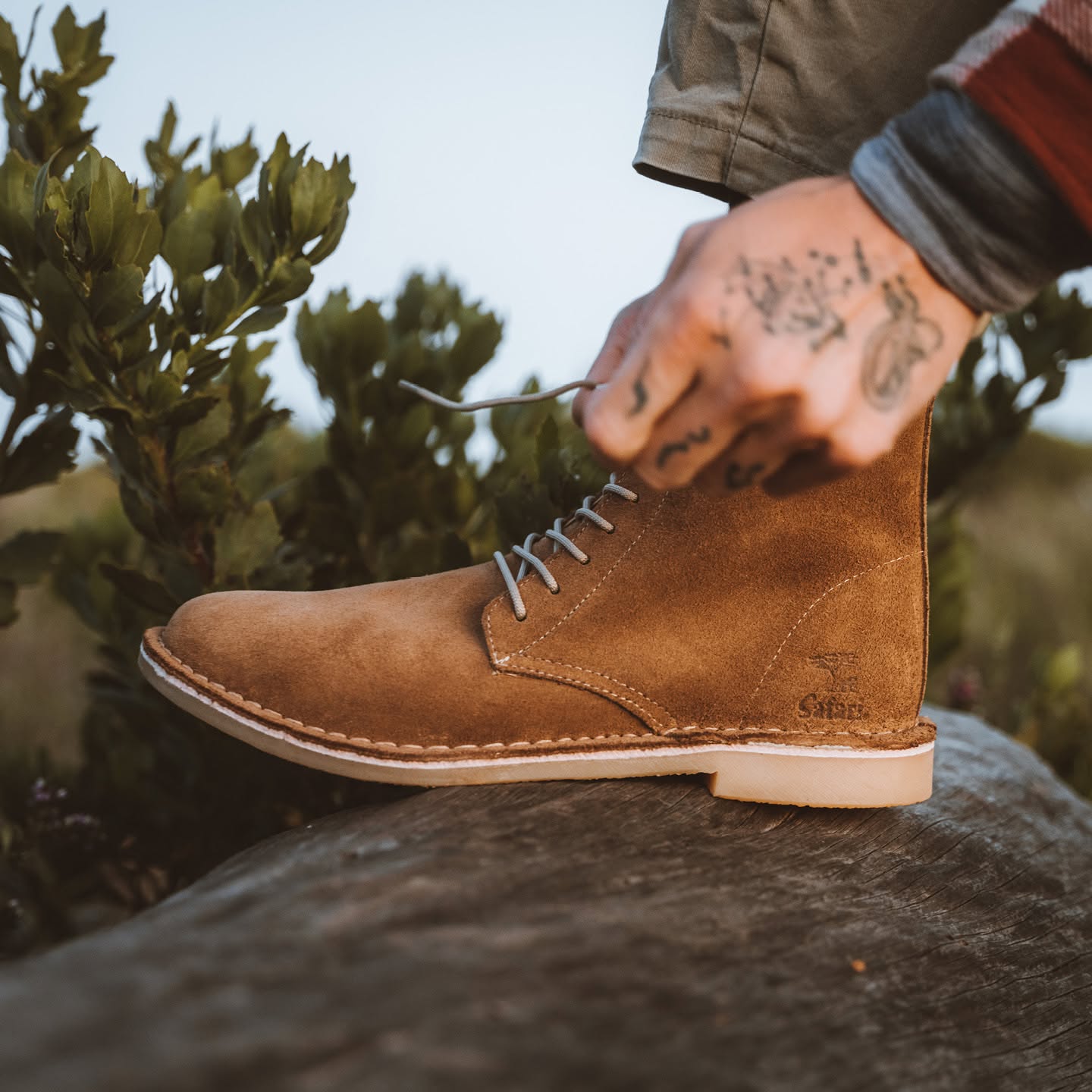
The common styles of leather boots for men
Chelsea boots
Pull-on boots with elastic side panels and no laces. They look smart under trousers and work with jeans, which makes them the easiest boot to wear to an office. The shape is popularly credited to Queen Victoria’s bootmaker, Joseph Sparkes Hall, in the 1850s (Wikipedia). Because the elastic holds your heel, a Chelsea that is slightly too long will slip with each step.
Chukka and desert boots
Ankle-height, with two or three pairs of eyelets and a simple flat sole. They are lighter and more casual than a Chelsea. We compare the two, and vellies, in vellies, chukkas and Chelsea boots compared.
Lace-up ankle boots
A little taller and more structured than a chukka, with more eyelets and more support. They suit weekends, commuting and light outdoor use, and the lacing lets you adjust the fit across the foot.
Work and hiking boots
Built for rough ground and long days, with stiffer soles, thick leather and often a waterproof lining. They take longer to break in and are heavier than the casual styles above.
Veldskoen high-tops
The veldskoen is the South African take on a soft, flexible field shoe. The ankle-height version keeps the same simple construction but adds support and keeps grit out. Our own My Vellies High Top is built this way, in genuine suede or leather, and it sits better under long trousers than under shorts.
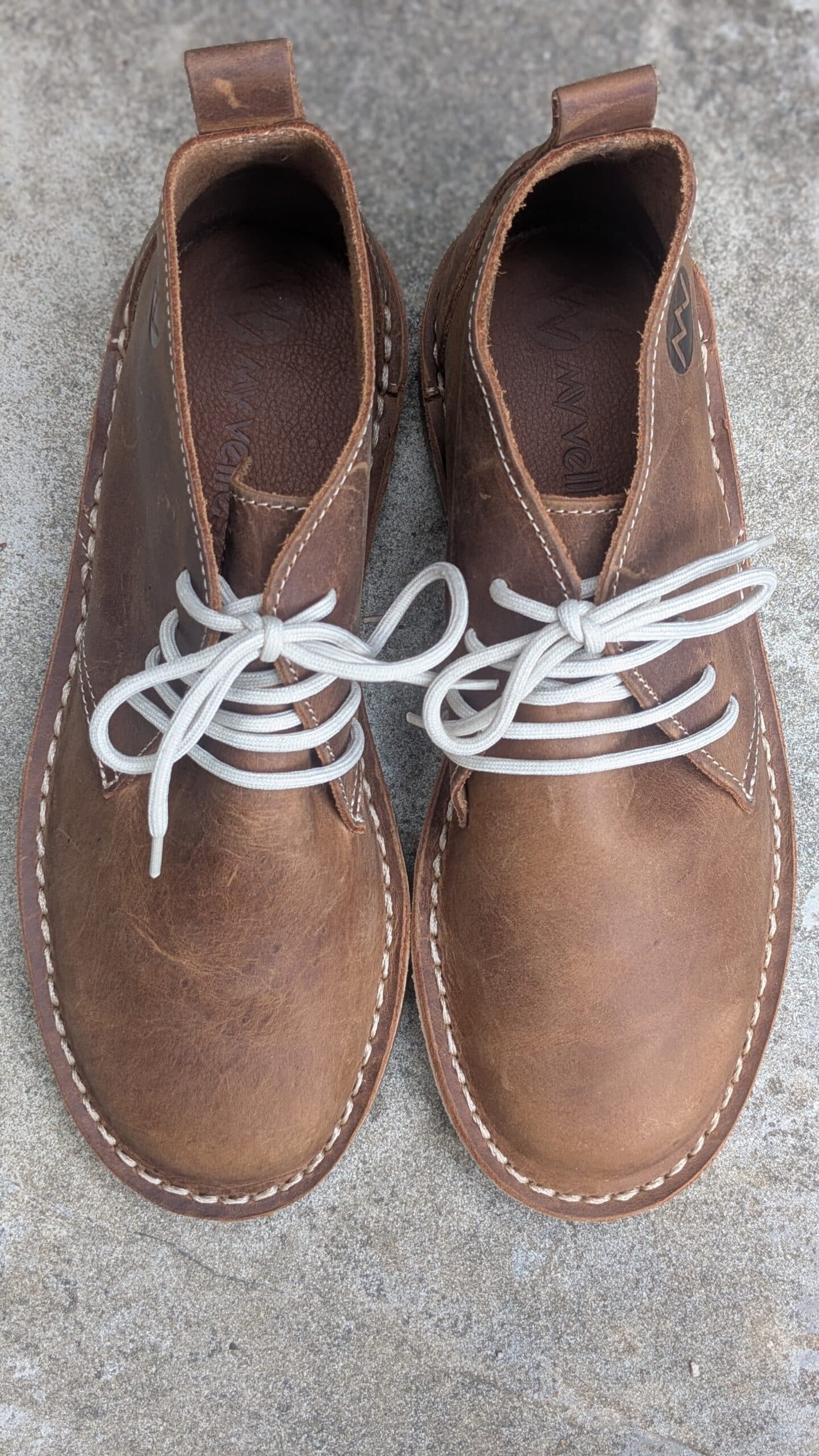
Leather types and what the labels mean
- Full-grain leather keeps the natural surface of the hide, including its marks. It is the most durable finish and ages well.
- Top-grain leather has had the surface lightly sanded for a more even look. It is smoother but slightly less hard-wearing.
- “Genuine leather” on a label means the product is real leather, but it does not tell you the grade, and it is usually a lower one. Ask what the upper is actually made from.
- Suede is leather with a soft napped finish, usually from the softer underside of the hide. It is comfortable and breathable but marks easily when wet.
- Nubuck is top-grain leather sanded to a fine nap. It is tougher than suede but still needs protection from water.
Leather is a natural material, so small variations in colour and grain are normal and are not a defect.
How the sole is attached
Construction decides whether a boot can be repaired. A Goodyear welt stitches the upper and sole to a strip of leather, so the sole can be replaced several times. A cemented sole is glued on, which keeps the boot lighter and cheaper but usually makes resoling impractical. The veldskoen tradition uses a hand-stitched, flexible sole, which is why vellies feel comfortable from the first wear rather than needing weeks of breaking in. If you want to wear one pair for many years, ask how the sole is attached before you buy.
Getting the fit right
- Try boots on late in the day, when feet are at their largest, and with the socks you will wear.
- You should be able to move your toes, and your heel should lift only slightly as you walk.
- Leather and suede soften and mould over the first week or two, so a pair that is snug but not painful will usually settle in. A pair that pinches on day one rarely improves.
- For our own vellies and the Bata Safari boots we stock, order your standard UK shoe size. Our sizing guide has more detail.
Looking after leather boots
Brush off dirt after wear, protect suede with a spray before the first wear, and condition smooth leather with a cream or wax a few times a year. If boots get wet, dry them naturally away from heaters, because strong heat can crack leather. Rotating between two pairs lets each one dry fully. Our guide to caring for leather vellies covers the routine step by step.
A checklist before you buy leather boots
- Does the maker say what the upper is made of, and is it real leather or suede?
- Is the stitching even, with no loose threads around the sole and eyelets?
- Do you know how the sole is attached, and can it be replaced?
- On a Chelsea, is the elastic firm and stitched in cleanly?
- Is the colour one you will actually wear with your existing clothes?
- What are the return and exchange terms? Ours are on the refunds and exchanges page.

What we make and what we resell
We think you should know exactly what you are buying, so here is the split. The Chelsea Boots Men Black and Chelsea Boots Men Brown Suede and the Safari Vellies lace-up boot are Bata Safari boots that we resell alongside our own range. The Chelsea boots are in waterproof hunting suede, with a wax-leather option. At the time of writing the black Chelsea is R450. Our own handmade boots include the Chelsea Boot Taupe and the My Vellies High Top above, both made to order.
Delivery on our boots takes 5 to 10 working days, and availability changes, so contact us if a style you want is not showing as available. You can browse the range under vellies for men.
Frequently asked questions
What is the best leather for men’s boots?
Full-grain leather is the most durable and ages best. Suede and nubuck are softer and more comfortable but need a protector spray and brushing. Check the label for the actual material, because “genuine leather” does not tell you the grade.
Should I choose a Chelsea boot or a lace-up boot?
A Chelsea is quicker to put on and looks sleeker under trousers. A lace-up lets you adjust the fit and gives more support, so it suits longer days on your feet.
How long do leather boots last?
With regular care, a good pair lasts for years. How long depends on the leather, how the sole is attached, how often you wear them and how well they are dried and conditioned.
Can I wear leather boots in summer in South Africa?
Yes, if the upper is breathable leather or suede and you wear thin socks. Unlined, soft uppers are noticeably cooler than heavy lined work boots.
Is suede suitable for rainy weather?
Suede marks when wet, but a protector spray helps a lot. If suede does get soaked, dry it naturally and brush the nap once it is dry.
About the author. Jano runs My Vellies, a South African footwear brand founded in Pretoria in 2019 that makes veldskoen and vellies to order. This guide reflects our product range as at October 2026. For sizing help or to ask about a made-to-order pair, contact us.