
Vellies vs Leather Shoes: Comfort, Durability and When to Wear Each
The vellies vs leather shoes comparison usually comes down to comfort, and vellies win that one quickly. But comfort is not the whole story: durability, weather and how smart you need to look all pull the other way. Here is the full picture, from a maker who repairs both.
By “leather shoes” here we mean conventional closed lace-ups and derbies: the Oxford-style shoe most offices expect. A vellie is also a leather shoe, but a softer, simpler one.
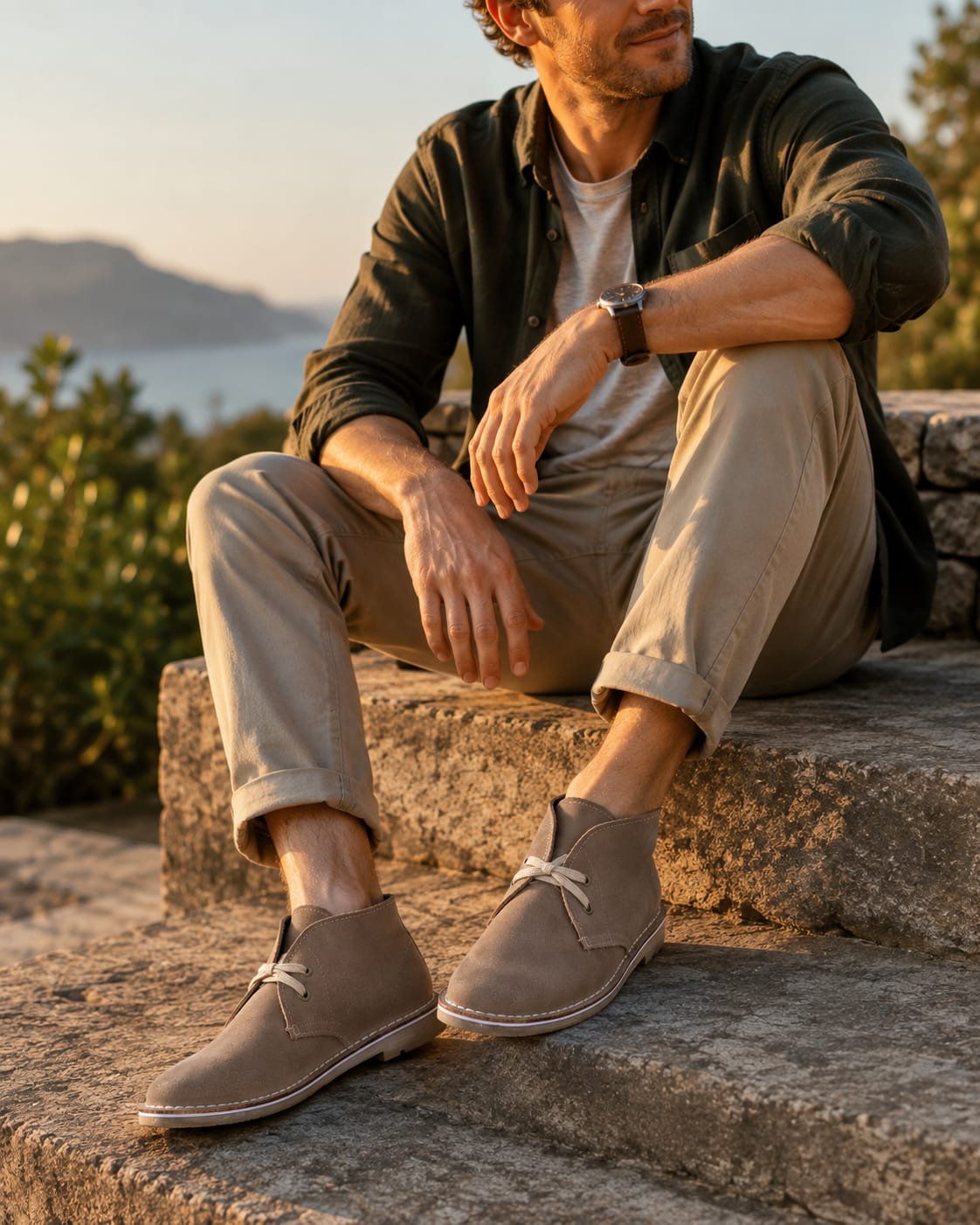
Comfort: vellies, clearly
A vellie has a soft unlined upper, a flexible sole and almost no break-in. A correctly sized pair is comfortable on day one and moulds to the foot within a week. A conventional leather shoe has a stiffer structure, a firmer sole and a lining, so it takes weeks to break in and never gets as soft.
On a hot day the difference is bigger. Unlined suede or nubuck breathes; a lined leather shoe traps heat and sweat. For long days on your feet in a South African summer, the vellie is the more comfortable shoe by a wide margin.
Durability: closer than it looks
A well-made conventional leather shoe with a stitched or welted sole can be re-soled many times and last decades. A vellie can also be re-soled, but the lighter construction and thinner sole wear faster on rough ground.
The deciding factor for both is the same: is the sole stitched or built to be replaced, or only glued? A glued sole ends either shoe when the tread wears through. Buy either style with a repairable sole and it will last for years.
Weather and care
Smooth full-grain leather on a conventional shoe takes polish, sheds light rain and cleans up easily. Suede and unlined leather on a vellie are more vulnerable: they mark, they dislike heavy rain, and a soaking dried too fast near a heater will stiffen them permanently.
If your week involves a lot of wet-weather commuting on foot, a smooth-leather conventional shoe is the more practical choice. In dry conditions, the vellie needs only an occasional brush and a protector spray.
How smart do you need to look
A conventional black Oxford is the correct shoe for a strict dress code, a formal event or a court appearance. A vellie, even a smart boot vellie, reads as smart-casual at best. If your work or social calendar demands genuinely formal footwear, you need a pair of conventional leather shoes as well.
For everything short of that, from a casual office to a wedding with a relaxed dress code, a dark boot vellie covers it and is far more comfortable.
Which should you choose
- Choose vellies if your days are casual to smart-casual, you are on your feet a lot, and the weather is mostly dry. They are the more comfortable everyday shoe.
- Choose conventional leather shoes if you have a strict dress code, you commute on foot in the rain, or you want one pair that can be resoled for decades.
- Most people need both: a vellie for the everyday majority of the week, and one pair of conventional leather shoes for the formal exceptions.
Browse vellies for men and vellies for ladies, and the care guide covers keeping suede and leather in shape.
Frequently asked questions
Are vellies more comfortable than leather shoes?
Yes, clearly. A vellie has a soft unlined upper, a flexible sole and almost no break-in, and it breathes far better in heat. A conventional leather shoe is stiffer, takes weeks to break in, and traps warmth.
Do leather shoes last longer than vellies?
A well-made conventional leather shoe with a welted sole can outlast a vellie, because the heavier construction takes more re-soles and the thicker sole wears slower on rough ground. But a vellie with a repairable sole still lasts years. A glued-only sole ends either shoe early.
Can I wear vellies to a formal event?
Only where the dress code is relaxed. For a strict dress code, a formal occasion or a court appearance, you need conventional black leather shoes. A dark boot vellie covers casual offices and relaxed events.
Which is better for rainy weather, vellies or leather shoes?
Smooth full-grain leather on a conventional shoe handles rain better: it sheds light water and cleans up easily. Suede and unlined leather on a vellie mark and stiffen if soaked and dried too fast, so they suit drier conditions.