
How to Compare Vellies Brands in South Africa
Search for vellies and you will find quagga vellies, kwagga vellies, twee vellies, parka vellies, grondpad vellies and a dozen more. Most shoppers end up comparing on price because the shoes look identical in photographs. They are not identical, and these are the five things that actually separate them. Comparing vellies brands in South Africa is hard precisely because the shoes look nearly identical in photographs.
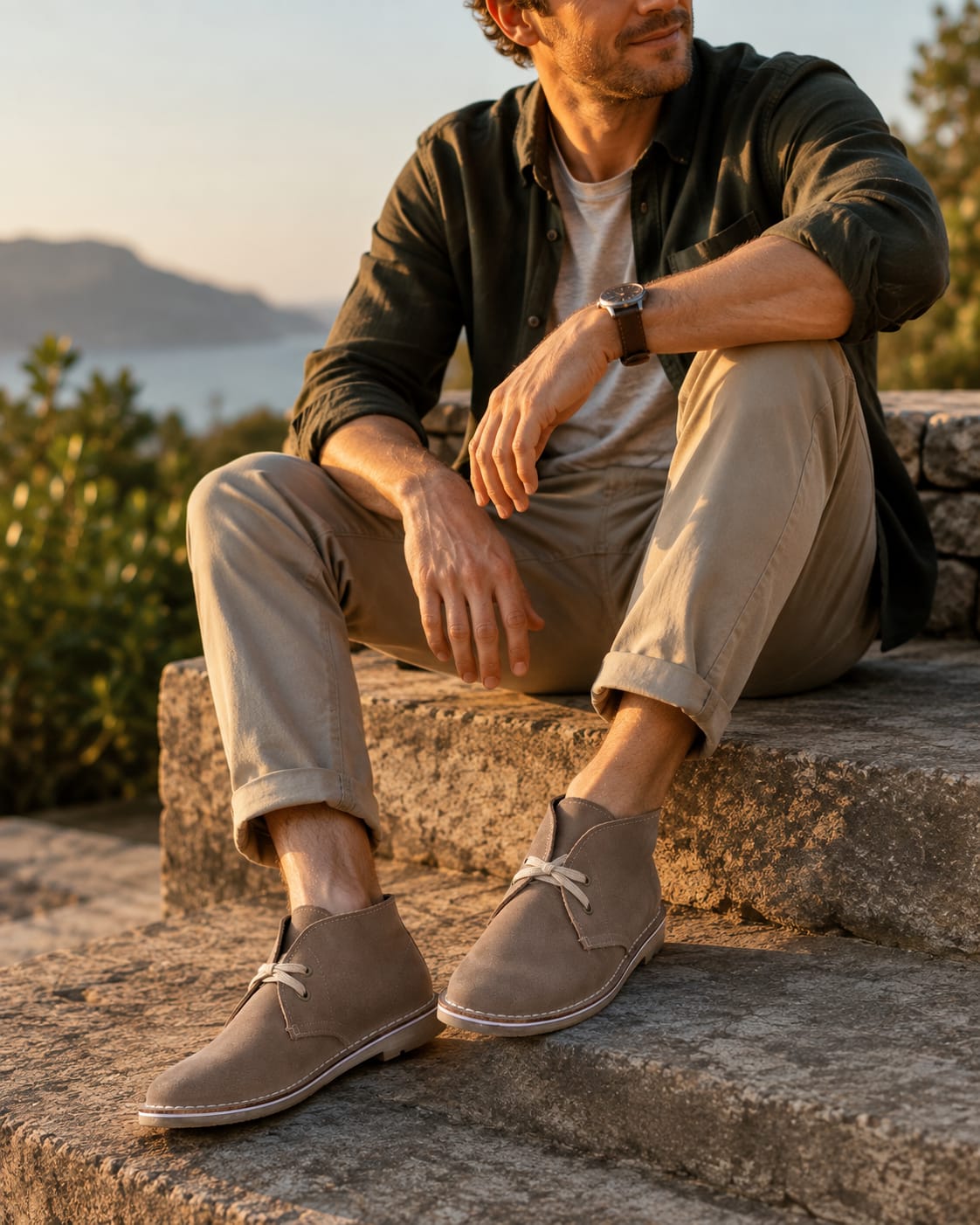
1. Is the footbed leather?
This is the fastest way to sort the market. A genuine veldskoen has a leather footbed. Cheaper pairs substitute board or foam, which is invisible in a photograph and obvious after a month. Leather absorbs moisture, breathes, and takes the shape of your foot. Nothing else does all three.
2. How is the upper attached?
A real vellie is stitchdown or bonded with no tacks or nails. If there is metal in the construction, it will eventually work loose or press through. Ask, or look inside the shoe at the heel.
3. What grade of leather?
Full grain, nubuck and suede are all legitimate. Bonded leather, sometimes described vaguely as genuine leather, is offcuts glued together and it fails at the flex points. Price usually tells you, but not always.
4. Made to order or mass produced?
Small makers cut and assemble by hand, which means fleece and hide can be matched across a pair and the fit is more consistent. It also means a wait, often two to three weeks. Mass production ships immediately and accepts more variation.
5. What happens when something goes wrong?
The least glamorous question and the most useful one. Can they resole them? Will they help if a stitch goes at month four? A maker who expects to see the shoe again builds it differently from one who does not.
Where price actually comes from
A pair under about R500 is almost always making a compromise on the footbed or the leather grade. Between roughly R700 and R1,200 you are paying for full grain hide, a leather footbed and hand assembly. Above that you are usually paying for brand, not construction.
Where we sit
We are a small maker. Pairs are made to order, which is why delivery takes longer than a warehouse would, and we use full grain hide with leather footbeds throughout. The veldskoen page sets out the construction in detail, and the range splits into men’s, ladies and unisex fits.
Frequently asked questions
What is the most important thing to check when comparing vellies?
Whether the footbed is genuine leather. Board and foam footbeds look identical in photographs and behave completely differently after a month of wear.
Why do some vellies cost R400 and others R1,200?
The gap is almost always the footbed and the leather grade. Under about R500 something has usually been substituted. Between R700 and R1,200 you are paying for full grain hide and hand assembly.
Is bonded leather real leather?
It is made from leather offcuts glued together, and it fails at the flex points far sooner than full grain. Descriptions like genuine leather can cover it, so ask specifically.
Are handmade vellies better than mass produced?
They are more consistent in fit, because hide can be matched across the pair, and they can usually be repaired. The trade-off is a wait of two to three weeks.
How can I tell if vellies have nails in them?
Look inside at the heel and feel the footbed. A genuine veldskoen is bonded or stitchdown with no metal, which is part of why it is comfortable from the first wear.