
Why Shoe Flexibility Matters for Your Feet
Most shoe-buying decisions come down to style and price. But shoe flexibility, meaning how freely a pair lets your foot move, is what actually decides whether you can wear it all day and whether your feet still feel good in a year. Here is why that matters, and what to look for.
We make vellies to order in South Africa, and flexibility is one of the first things customers mention when a pair wears in well. It is also the first thing missing from the cheap shoes people bring us hoping to have repaired.

What your foot actually does when you walk
Your foot is not a solid block. It flexes at the toes as you push off, and the arch of the foot compresses and springs back with each step, storing and releasing energy. Twenty-six bones and more than thirty joints are involved in a single stride.
A shoe that is too rigid stops most of that from happening. Your foot is forced to move as one piece, your calf and arch muscles work harder to compensate, and the result is fatigue by mid-afternoon. Over months it can show up as arch pain, tight calves and a heavier, more tiring walk.
Why cheap shoes are usually stiff
Stiffness is often a shortcut. A cheap shoe uses a hard, moulded sole unit and a bonded leather or synthetic upper that never softens, because that is faster and cheaper to produce than a flexible leather build. It feels supportive in the shop. Six months later it has lost its shape, the sole has cracked at the one point it does flex, and it was never comfortable to begin with.
How a well-made leather shoe moves
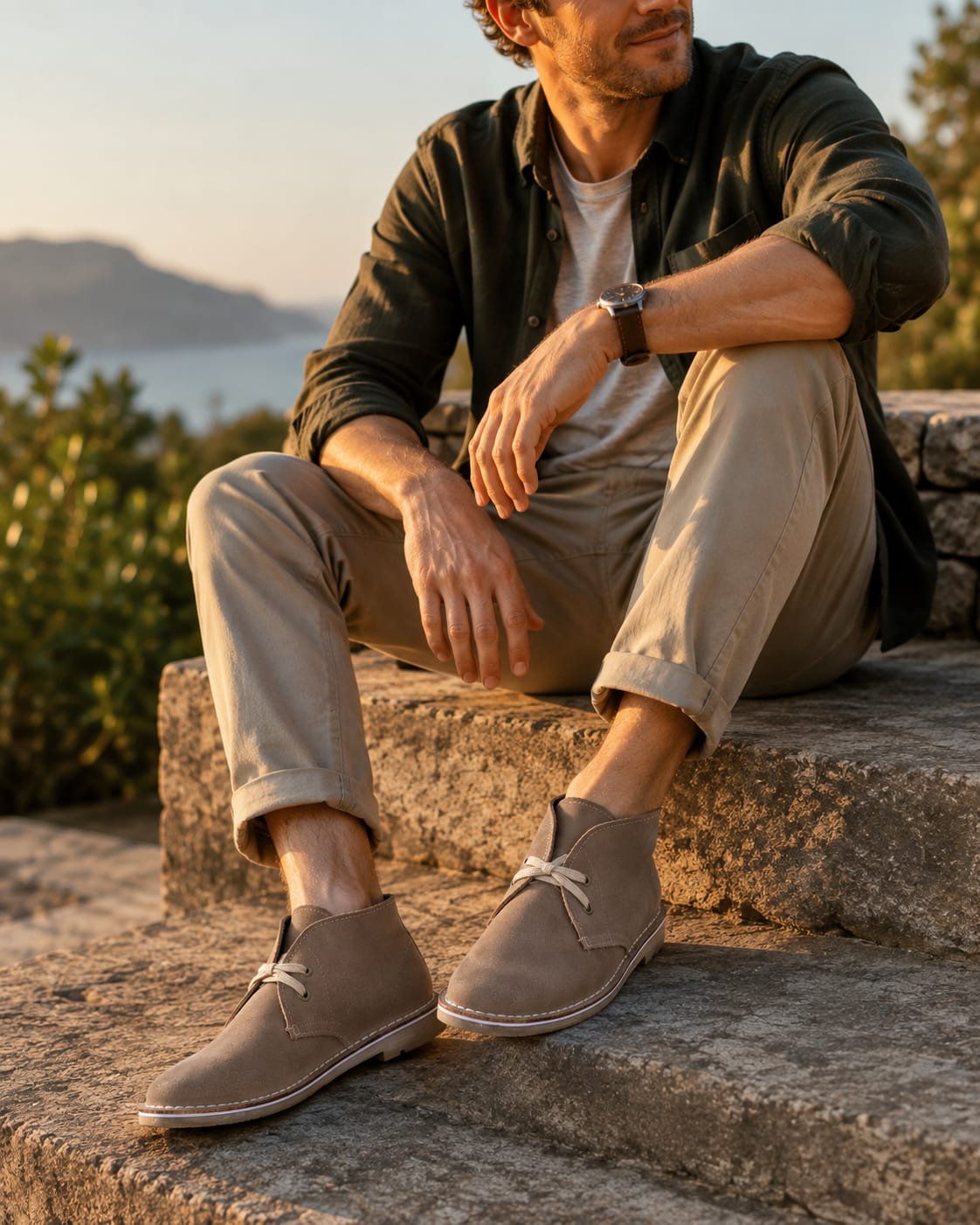
A genuine veldskoen is built to flex where your foot does. The upper is vegetable-tanned leather or suede, bonded to a leather footbed and a rubber sole with no tacks or nails anywhere in the construction. Nothing rigid is built in.
The leather also does something a synthetic cannot: it softens with wear and takes an impression of your foot, so an older pair fits better than a new one. That combination, flexibility plus a personalised fit, is what makes a good leather shoe comfortable for years rather than weeks.
When you do want a stiffer shoe
Flexibility is not always the goal. For multi-day hiking on rocky ground, or long-distance running on hard surfaces, a stiffer sole protects your foot and adds propulsion. The point is to match the shoe to the job. For everyday walking, standing and general wear, which is most of what most people do, a flexible leather shoe is the more comfortable choice.
How to check flexibility before you buy
- Hold the shoe at heel and toe and bend it. It should flex at the ball of the foot with moderate pressure.
- Watch where it bends. A good shoe flexes at the toes. A poor one bends in the middle of the sole, which is the opposite of what your foot does.
- Twist it gently. Some give is good. A shoe that feels like a plank is going to fight you.
Our range
All our vellies use the same flexible construction, across men’s, ladies and unisex fits. They are handmade to order, so allow a few weeks, and delivery is free on orders over R200 anywhere in South Africa. Once you have a pair, our care guide covers keeping the leather supple.
Frequently asked questions
Why does shoe flexibility matter?
Your foot flexes at the toes and rolls through the arch with every step. A shoe that is too stiff fights that motion, which shows up as fatigue by the end of the day and, over months, as aching arches and calves. A flexible sole lets your foot move the way it is built to.
Are leather vellies flexible when new?
They start fairly supple and become more so. Genuine leather softens and takes the shape of your foot over the first few weeks, and the stitchdown construction with no nails means there is nothing rigid built into the shoe to resist that.
Do flexible shoes offer enough support?
For everyday walking and standing, yes. A flat, flexible shoe lets your own foot muscles do their job, which many people find more comfortable over time than a heavily structured shoe. For rocky hiking or long runs, a stiffer sole is the better tool.
How can I tell if a shoe is too stiff?
Hold it at the heel and toe and try to bend it. A good everyday shoe flexes at the ball of the foot with moderate pressure. If it barely bends, or only bends in the middle of the sole rather than at the toes, it will fight your stride.
Do vellies lose flexibility over time?
No. If anything they get more supple as the leather works in. What wears out first is usually the sole tread, and a good pair can be resoled rather than replaced.