
Vellies for Safari and Bush Travel: What Actually Works
Safari packing lists tend to recommend hiking boots, and for most game viewing that is more shoe than anyone needs. A vellie is closer to the right answer, which is unsurprising given it was designed for exactly this landscape. Vellies for safari and bush travel are closer to the right answer than hiking boots.
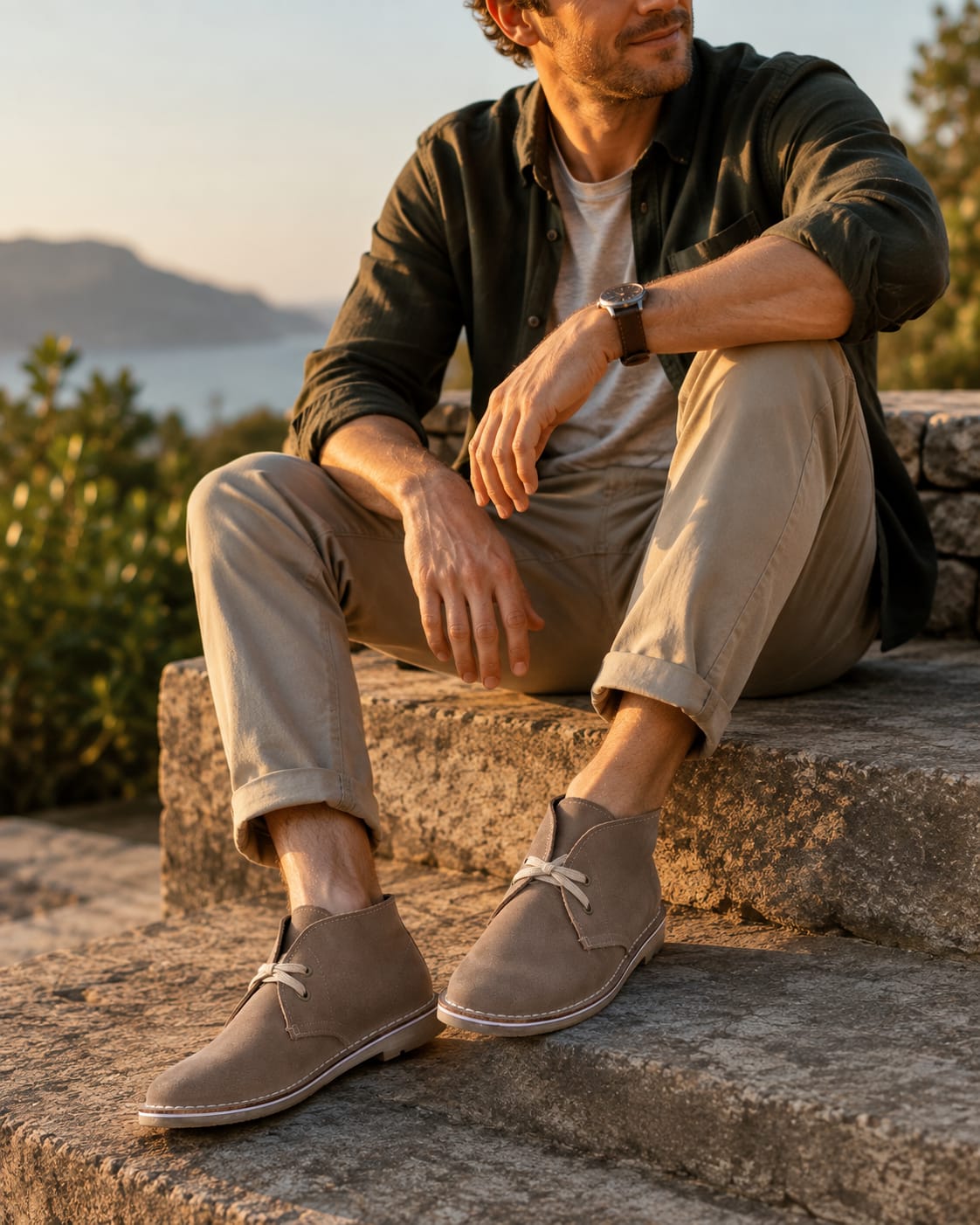
Why vellies suit the bush
Most safari days involve a vehicle, a lodge, gravel, and short walks on uneven ground. That combination punishes a heavy boot, which is hot and stiff, and a trainer, which fills with dust and grass seeds.
A vellie sits in between: a leather footbed that breathes in heat, a rubber sole with enough grip for gravel and dry grass, and a low topline that does not cook your ankles at midday. It is also quiet, which matters more than people expect on a walking safari.
Where they are not enough
Be honest about the limits. For serious multi-day hiking, wet season mud, or anywhere you need ankle support on rocky descents, a proper boot wins. A vellie is a walking shoe, not a hiking boot.
Colour in the bush
Neutral. Tan, brown and olive are ideal, which is convenient because they are the standard colours anyway. Avoid white soles, which stop looking neutral within an hour, and bright uppers if you will be on a walking safari where the guide has asked for muted clothing.
What to pack alongside
- Two pairs of socks per day. Dust and heat, not distance, are what wear socks out on safari.
- A brush. Five minutes at the end of the day keeps dust out of the grain.
- Something open for the evening. Leather sandals or slops for around the lodge.
Breaking them in first
Do not take brand new shoes on safari. Vellies do not need much breaking in, but they do relax about half a size across the first few weeks, and you want that to happen at home rather than on day one of a trip.
After the trip
Dust is abrasive. Brush it out rather than washing it off, then feed the leather, because dry heat pulls the oils out faster than anything else. A pair that has done a week in the Kruger needs a cream before it goes back in the cupboard.
What to look at
The Safari vellies range is the obvious starting point, and the wider men’s and ladies ranges cover the same construction in more colours. The veldskoen page explains why the build suits this use.
Frequently asked questions
Are vellies good for safari?
For game drives, lodge walking and short bush walks, yes. The leather footbed breathes in heat and the rubber sole grips gravel and dry grass. For multi-day hiking or rocky descents, a proper boot is better.
What colour shoes should I wear on safari?
Neutral tones: tan, brown or olive. Avoid white soles, which stop looking neutral almost immediately, and bright colours if you will be on a walking safari.
Should I break in new shoes before a safari?
Yes. Vellies need little breaking in but relax about half a size over the first few weeks, and you want that to happen at home rather than on the first day of a trip.
How do I clean vellies after a bush trip?
Brush the dust off when dry rather than washing it, then feed the leather with a cream. Dust is abrasive and dry heat strips the oils out of leather quickly.
Do I need hiking boots for a safari?
Usually not. Most safari days involve a vehicle and short walks, where a heavy boot is hotter and stiffer than necessary.